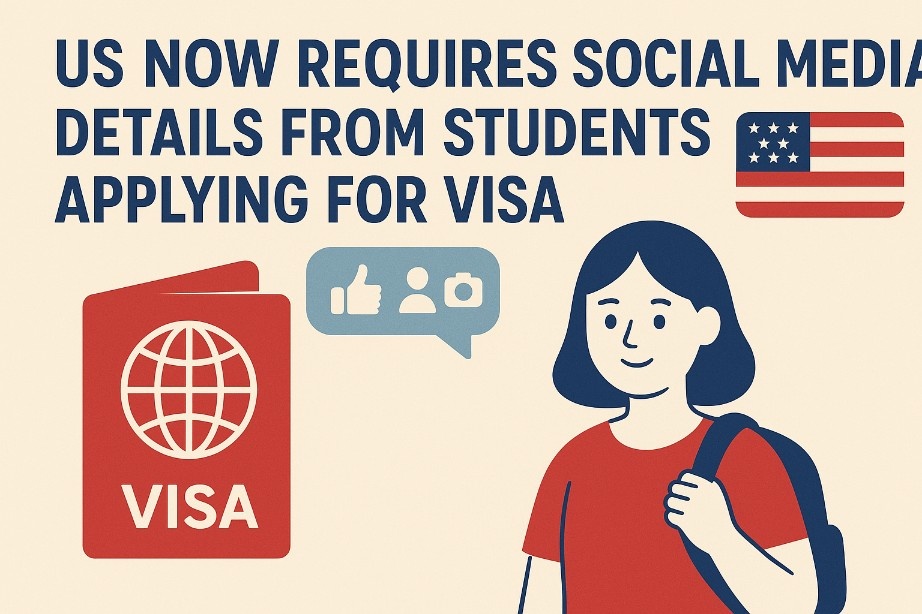
June 23, 2025 | Washington D.C./New Delhi – In a significant move impacting Indian and international students, the U.S. Department of State has intensified scrutiny over US student visa applications by mandating disclosure of social media handles used over the past five years. The policy, though initially introduced under the Trump administration in 2019, is now being enforced more stringently amid global security concerns and increasing student inflow in 2025.
🎓 US Student Visa – What’s New for F-1 Visa Applicants?
As per the latest update to the DS-160 and DS-260 visa forms, all applicants — especially those applying for F-1 (student), J-1 (exchange), and M-1 (vocational) visas — are required to:
- List all social media platforms used in the past 5 years.
- Provide usernames/handles, not passwords.
- Disclose accounts used on Facebook, Instagram, Twitter/X, LinkedIn, YouTube, Reddit, and even niche platforms.
🔍 Key Change: Unlike earlier optional fields, these questions are now compulsory for visa processing and background checks.
📈 Why This Matters in 2025
- With the U.S. witnessing a 22% rise in Indian student visa applications this year, immigration and homeland security departments are under pressure to filter risks related to online extremism, fraud, and immigration misuse.
- The U.S. says the move enhances vetting procedures and supports national security without violating free speech.
🛂 Impact on Indian Students
India remains the second-largest sender of international students to the U.S. — with over 350,000 Indian students currently enrolled. Many students now express concern over:
- Privacy invasion
- Potential misinterpretation of past posts
- Slower visa approval timelines
However, U.S. authorities claim that only public posts are reviewed, and no applicant is denied solely on the basis of social media content unless it links to security threats or visa fraud.
📢 Official Statement
A State Department spokesperson said:
“We are committed to facilitating legitimate travel to the U.S. while safeguarding our national interests. Social media data offers critical insights into an applicant’s credibility, network, and consistency in information.”
🔐 What Students Should Do Now
✅ Tips to Prepare Your Visa Application:
- Clean up your public social media accounts before applying.
- Ensure information matches what’s on your visa form.
- Avoid political or controversial posts that may be misinterpreted.
- Be honest: non-disclosure or false information can result in visa denial.
🌐 Reactions from India
- Education consultants and universities are urging transparency from students and offering pre-visa social media audits.
- Several student groups have raised concerns with the Indian Ministry of External Affairs, calling for a formal dialogue with U.S. consulates.
- Cyberlaw experts warn about potential misuse or profiling based on digital behavior.
✈️ Conclusion
With increasing geopolitical tensions and a tighter immigration environment, student visa scrutiny is evolving rapidly. Indian students aspiring to study in the U.S. must now treat their digital footprint as seriously as academic credentials.
Follow Duniya Daily for more such news and updates!